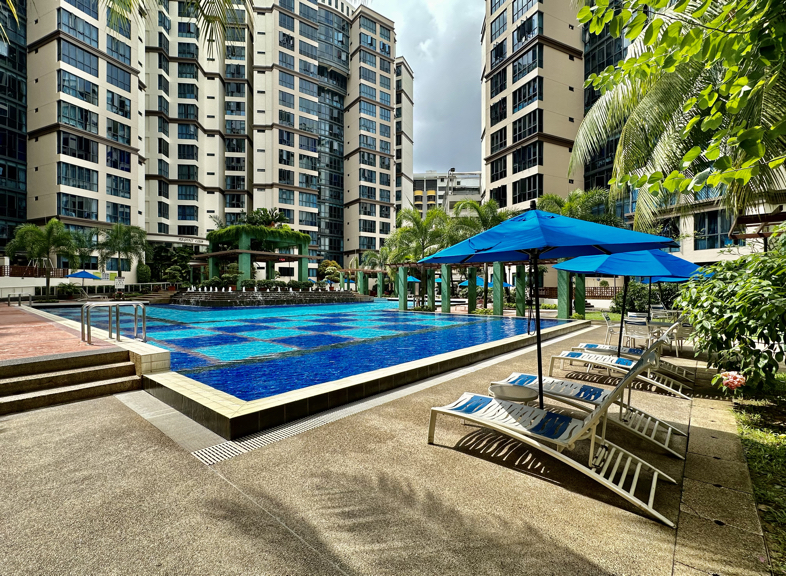
It’s been so long since I last posted. My passion for translating lyrics has not waned but I embarked on a housing journey with my 20-year-long friend whom I have known since primary school.
We are not of age to purchase an HDB flat in Singapore under the Singles Scheme but we are done renting from the open market, fearing of rental hike when tenancy is up and pouring our money into strangers’ pockets.
We talked about it for a year, since the beginning of 2023, and finally started hunting for a condominium apartment (too broke for landed property) in April 2024.
It is thus far the toughest damn thing I have done in my life, so I thought writing a guide to Private Home Ownership could benefit you out there.
1. Hunting Phase (~1 month)
Before contacting agents, we had been shortlisting condominium apartments listed in PropertyGuru and 99.co apps based on our preferred locations and affordability. (Do note that singles are not eligible to purchase executive condominiums, so do filter mindfully.)
Finally, we brought ourselves out of our comfort zone and contacted the agents to schedule house viewings. (We did not need to have an agent as we did not have any property to sell, so we had to complete the purchase process on our own.)
After several viewings, we expressed our interest in a couple and started the haggling battle. (We went $300k lower than the listed price, on hindsight, we’re thankful that the owner did not shut us off. Eventually, we managed to secure a price that was $40k below valuation after three bargains. The moral of the story is don’t be afraid to haggle!)
During this one month, we also reached out to several banks to apply for housing loans. Not trying to promote any bank here but we were put off by how DBS/POSB treated us like children trying to waste their time. On the other hand, we were impressed by how OCBC respected us and referred us to a staff handling mortgage loans who followed up with us via WhatsApp.
We completed the housing loan application online and were guided with document submission. A law firm was subsequently assigned by OCBC to follow up with our property purchase (more details below).
2. Option Period (~2 months)
To secure the apartment at the price we asked for, we had to make an offer to purchase the property (via an ‘Offer to Purchase’ document) and transfer 1% of the purchase price, termed as ‘Option money’ to the owner to book the apartment.
The owner (aka vendor) had 7 days to accept the Offer.
Upon the acceptance of the offer by the owner (aka vendor), the owner (aka vendor) granted us (aka offeror or purchaser) the ‘Option to Purchase’ the property and the Option would expire in 14 days.
[Click <here> to know the difference between ‘Offer to Purchase’ and ‘Option to Purchase’]
1. Offer to Purchase:
- Definition: An offer to purchase is a formal proposal made by a potential buyer to a seller, expressing their intent to buy a property or item at a specific price and under certain conditions.
- Binding Nature: Once accepted by the seller, the offer becomes a binding contract. Both parties are obligated to follow through with the sale under the agreed terms.
- Process: It is typically a part of the negotiation process, and the seller can accept, reject, or counter the offer.
Example: A buyer submits an offer to purchase a house for $300,000, specifying conditions like inspection and financing approval.
2. Option to Purchase:
- Definition: An option to purchase is a legal agreement where a seller grants a potential buyer the right (but not the obligation) to purchase a property or item within a specified time period, at a pre-agreed price.
- Binding Nature: The buyer is not obligated to buy, but the seller must hold the property for the buyer during the option period. The buyer can decide to exercise the option or let it expire.
- Consideration: The buyer usually pays an option fee to secure this right, and if they don’t exercise the option within the time frame, they forfeit the fee.
Example: A developer pays $10,000 for an option to purchase a piece of land within one year for $500,000. If the developer doesn’t exercise the option, they lose the $10,000, but they’re not required to purchase the land.
Key Differences:
Flexibility: The option gives more flexibility to the buyer, while an offer requires commitment once accepted.
Commitment: An “offer to purchase” becomes binding once accepted; an “option to purchase” gives the buyer the right, but not the obligation, to buy.
–
Within these 14 days of the ‘Option Period’, we had to meet our solicitor assigned by OCBC to sign the necessary documents (listed below) and prepare a cashier’s order for the exercise fee (4% of purchase price). (There is a service fee for issuing cashier’s orders.)
| Name of document | Remarks | |
| 1 | Option to Purchase | As mentioned, the owner (aka vendor) has granted us the Option to Purchase, we have to sign and exercise the option. |
| 2 | Solicitor Form | Detailing the legal fee, CPF usage etc. |
| 3 | Authorization Form | For CPF usage for property purchase |
| 4 | Declaration Form | To declare if you have another private property for the calculation of Additional Buyer’s Stamp Duty, if any. |
The ‘Option to Purchase’ document would also state the date of completion (i.e., the date of key collection). (The completion period for our purchase was 10 weeks; however, it is a negotiable period.)
My friend and I chose to purchase the property as ‘Tenants in Common‘. If one of us passes away, our share of the property will not pass automatically to the other share owner but will pass under our will or according to the Intestate Succession Act. One can choose to purchase as ‘Joint Tenants’ as well.
[Click <here> to know the difference between ‘Tenants in Common’ and ‘Joint Tenants’.]
1. Tenants in Common (TIC):
- Ownership Share: Each co-owner (tenant) owns a distinct, separate share of the property, which can be equal or unequal. For example, one person could own 60%, and the other 40%.
- No Right of Survivorship: When a tenant in common dies, their share of the property does not automatically transfer to the other co-owners. Instead, it is passed on to the deceased’s heirs or beneficiaries, according to their will or the law of intestate succession.
- Separate Interests: Tenants in common can independently sell, transfer, or mortgage their share without the consent of other co-owners.
Example: If two people own a house as tenants in common and one dies, their share may go to their children, not the other co-owner.
2. Joint Tenants (JT) with Right of Survivorship:
- Equal Ownership: All co-owners (joint tenants) hold an equal and undivided interest in the property. Each joint tenant owns the whole property, not a percentage.
- Right of Survivorship: When one joint tenant dies, their share is automatically transferred to the surviving joint tenants, not to the heirs of the deceased. This bypasses probate.
- Four Unities: For joint tenancy to be valid, it typically requires the “four unities”: possession (equal right to use), interest (equal ownership), time (acquired at the same time), and title (same document).
Example: If two people own a house as joint tenants and one dies, the other becomes the sole owner of the property automatically, regardless of the deceased’s will.
Key Differences:
Transferability: A Tenant in Common can sell or transfer their share independently, while a Joint Tenant typically cannot do so without dissolving the joint tenancy.
Ownership Shares: In Tenants in Common, ownership shares can vary, while in Joint Tenants, ownership shares must be equal.
Right of Survivorship: Joint Tenants have the right of survivorship, meaning the property passes to the surviving owners. Tenants in Common do not have this right; each owner’s share passes to their heirs.
3. Nearing Completion Period (~1 month)
There were about 2 weeks which was quite peaceful, so peaceful that the entire experience beforehand felt like a scam.
Then, we received an email from our solicitor’s secretary, demanding our urgent attention and payment. The email also included documents proving that the owner had paid off property tax and maintenance fees, including the sinking fund, for the property.
[Balance Purchase Price] – [CPF Lumpsum (amount we decided to wipe off from our OA)] – [Bank’s Housing Loan] = [Outstanding Amount to be Paid in Cash]
We obtained another cashier’s order to pay the outstanding amount to the owner.
Also, we transferred payment to our dear solicitor (bank admin fees & solicitor’s costs and disbursements).
4. Key Collection on Completion Date
Happily headed to our solicitor’s office to collect (a darn lot of) keys. We only had to sign a document to prove that we had collected the keys on this date.
We were provided with the following documents too:
- Collection Form (by Solicitor’s Office; which we signed)
- Inland Revenue Authority of Singapore (IRAS) (Proof of Update of Property Ownership)
- Certificate of Stamp Duty
- Letter to Condominium Management (detailing notice of sale)
Finally, off we head to our home!
Upcoming assignment: Renovation.



 PinkOlifant